01
Load first, then design
A mower shed and a loaded RV do not need the same slab. We ask what is going on the pad, now and down the road, and spec thickness and steel from the answer.
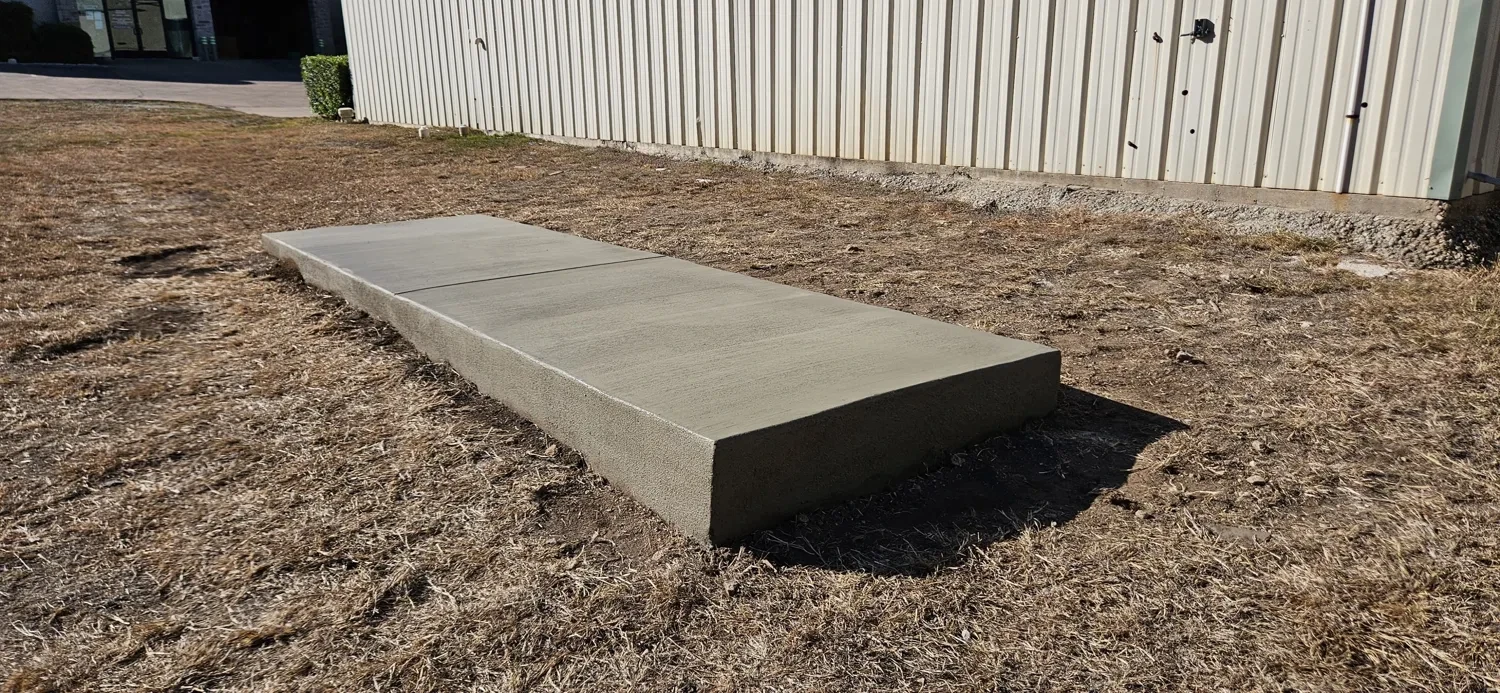
Sheds, shops, RV pads, hot tubs: each one loads concrete differently, and on Mesquite clay a pad poured thin on bare dirt will tell on itself within a few seasons. We size the slab to what is actually going to sit on it.
Credibility comes from how it's built, not from promises. Here's the order of operations on every concrete pads & slabs job.
A mower shed and a loaded RV do not need the same slab. We ask what is going on the pad, now and down the road, and spec thickness and steel from the answer.
We site the pad so roof runoff and yard drainage move past it, not under it. Water working a slab edge is the most common failure we dig up in this town.
Sod and soft soil come out, the subgrade gets compacted, and base rock goes down in lifts. On expansive clay, this step decides how the slab behaves for decades.
Rebar sits on chairs, edges get thickened where wheels or posts concentrate weight, and anchor bolts or hold-downs are set in the wet pour when your building plan needs them.
Summer pours go early and cure under control, and the handoff comes with straight talk on when the slab can take weight. Heavy loads wait until the concrete is ready.
Most contractors vanish after the deposit. We pick up the phone, show up when we say, and stand behind the work after the truck leaves. The follow-through is the difference.
A foreman we know runs your job and a vetted crew does the work, managed by Lucky's, one company accountable from the first call to the final walkthrough.
COI and lien waivers on file before we break ground. The documentation that lets commercial clients pay and gives homeowners peace of mind.
Prepped subgrade, reinforced and mixed to spec for the job, and proper curing. We build credibility through the process, not promises. On concrete pads & slabs, that starts with load first, then design.
A working starting range is $7 to $13 per square foot in this part of Texas, with thickness, steel, and site access moving the number most. A four-inch shed pad and a six-inch shop slab price very differently on purpose. We price after seeing the site, never a phone number we can't stand behind.
Five to six inches with proper reinforcement covers most rigs, and the axle weight of your specific setup decides where in that range you land. Thickened edges matter because tires load the perimeter hardest. We spec it from your RV, not from a generic chart.
It depends on the size of the structure and where it sits on the lot, and the city's rules for accessory buildings decide it. We flag whether your project needs city review before any work starts, so you know the full picture at the bid. No one likes learning that after the concrete is down.
Yes, and planning ahead is the whole game: footings or thickened edges where walls land, anchor bolts placed to your building's layout, and thickness rated for the finished use. Share the building plan at the estimate. A patio-grade slab under a future shop is a false economy.
Usually water: a downspout or grade low spot soaked one edge, the clay moved, and the unreinforced pad followed it down. Uncompacted fill under part of the slab causes the same signature. The replacement fixes the drainage and the base, not just the concrete.
A filled tub with people in it concentrates thousands of pounds on a small footprint, so the pad needs rated thickness, reinforcement, and a dead-level surface. Equipment access and drainage placement matter too. Give us the tub's spec sheet and we build to it.
You'll hear back from a real person, usually the same day. No call center, no runaround, no chasing us down.
Booking up fast this season. Or call (469) 429-1660